Why personalization has become the most important thing your media can do and what it takes to get it right.
Shoppers don’t make decisions at the shelf. They make them in the days before, scrolling between tasks,
planning the week’s meals, responding to a cold snap outside or a holiday coming up fast. By the time they
walk through the door, the mental list is already built. The brands on it earned their spot early. The ones that
didn’t are fighting for attention in the most competitive, expensive place possible.
This is the window personalization was made for – the first impression.
The business case is settled. The execution gap isn’t.
The data is unambiguous. Eight in 10 Americans say personalized shopping is important to them when deciding where to
shop. Three in four are more likely to purchase when they receive a truly personalized offer or recommendation. And
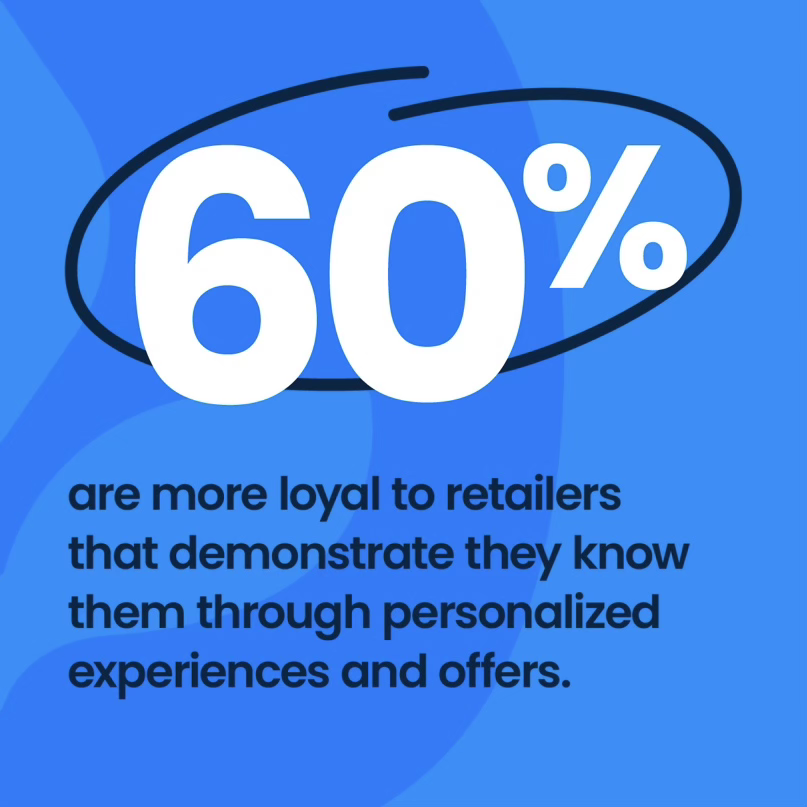
60% are more loyal to retailers that demonstrate they know them through personalized experiences and offers
(Amperity, 2026 State of Personalization in Retail).
But most brands aren’t delivering on it. The majority of Americans, 57%, say that even brands claiming to
personalize still feel generic. And when retailers do personalize, 79% of shoppers say it’s not rare for them
to get it wrong with irrelevant, mistimed, or invasive outreach (Amperity, 2026 State of Personalization in Retail).
The gap isn’t a creative problem. It’s a data problem. Generic display can’t personalize because it
doesn’t know enough about the shopper. It reaches a demographic, not a person. A zip code, not a moment.
What real personalization looks like in media.
Closing that gap requires more than behavioral targeting. It requires connecting shopper insights with relevant
signals, including, context, and product availability, to deliver creative that reflects the audience and the
moment.
That’s where AI-powered personalization changes the equation.
Perion’s approach puts it plainly:
creative is still king, but data is the prime minister and AI is the government. Generative AI enables dynamic
creative to be rendered at the audience level in real time, drawing on layered signals including first-party
purchase data and pricing and inventory variables, weather, location, and context. The result isn’t
personalization in the broad sense. It’s relevance at the moment of intent.
• Real-time pricing and promotions keep offers accurate and relevant, with no stale creative and no missed
windows.
• Weather-triggered messaging shifts automatically with conditions. A cold snap cues warmth. A snowstorm prompts
a stock-up message. A warm afternoon leans into seasonal craving. The message feels timely because it is.
• Daypart-aligned creative adapts across morning, midday, and evening, matching how shoppers are thinking and
what they’re planning next.
• Local store callouts surface the nearest Albertsons location, turning every impression into a direct path to
purchase.
• Portfolio storytelling lets brands tell a fuller product story, multiple SKUs, one campaign, reaching shoppers
across the full consideration journey.
On the Digital Out-of-Home side, precision runs deep. Screens are mapped to key locations informed by verified
shopper data. AI-driven optimizations run continuously on SKU and store-level sales. The result is less waste, more
relevance, and programmatic efficiency that makes every dollar work harder.
Proof that it moves shoppers, not just metrics.
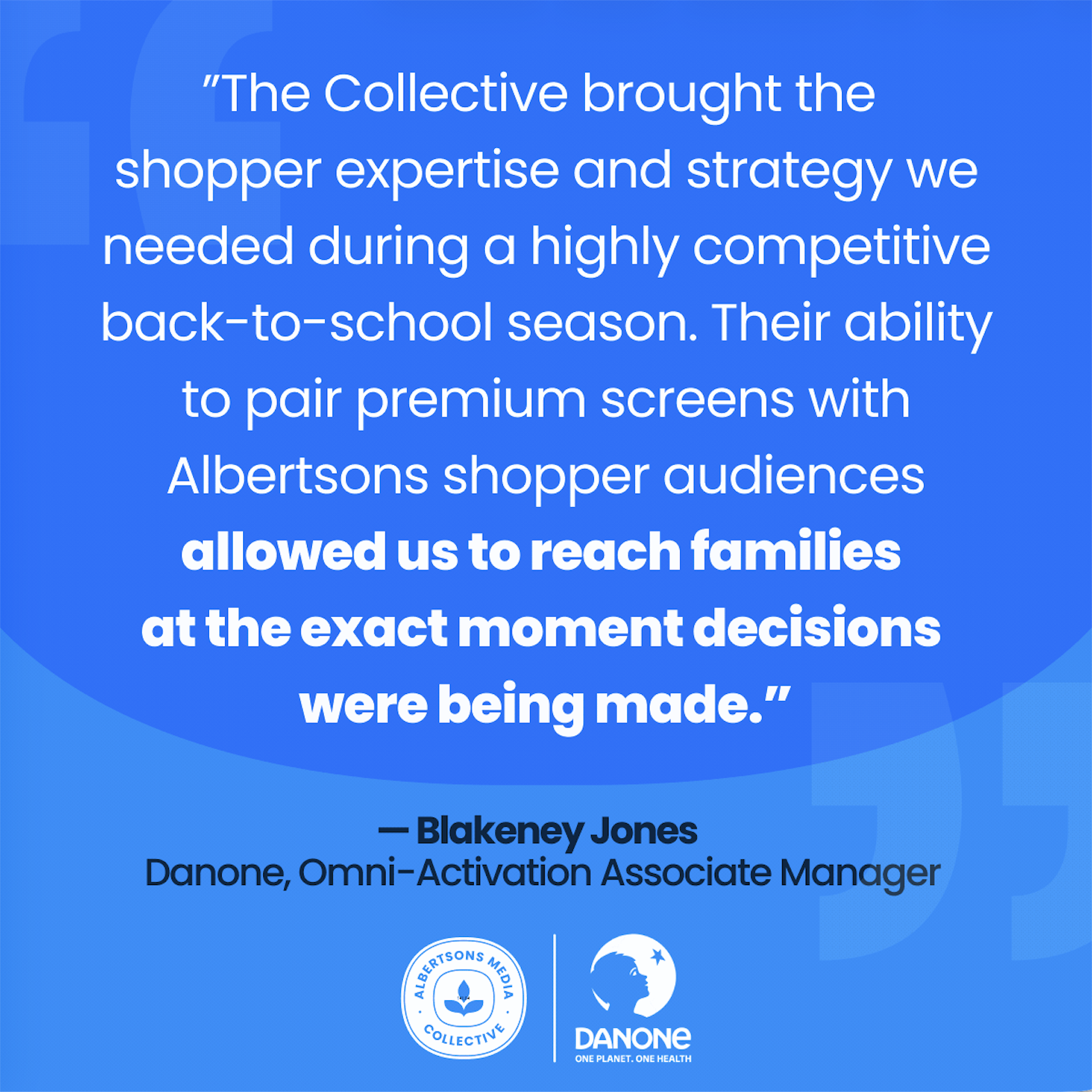
During back-to-school season,
Danone
needed to reach busy parents at the exact moments most likely to influence purchase decisions. The Collective paired
Digital Out-of-Home with first-party audiences and dynamic localized creative, then extended through high-impact
offsite display, social, and onsite to drive full-funnel conversion.
The result: 17% sales lift above benchmark, 41% new-to-brand buyers.
During Thanksgiving, one of the highest-intent grocery planning windows of the year, a
pantry essential brand
needed to engage shoppers before lists were set. The Collective built a full-funnel strategy
anchored in high-impact carousel units with live pricing and nearest store location, reaching verified Albertsons
shoppers with proven baking affinity at peak consideration.
The outcome: +89% ROAS lift and a +21% revenue lift versus last year’s Thanksgiving campaign.
The first impression funds everything that follows.
Shoppers want to be reached with relevance, and they expect it from the very first interaction. Nearly a third of
Americans say they want personalized offers right away, starting with their first touchpoint with a brand
(Amperity, 2026 State of Personalization in Retail).
The brands winning at the shelf are winning the consideration window first, with media that knows who the
shopper is, adapts to their moment, and proves it drove sales. AI-powered personalization is what makes that
possible at scale.
Personalization starts with the right data. The first impression is where it pays off.